What a Short Circuit Actually Is
A short circuit happens when current finds an unintended path of very low resistance, usually between a hot conductor and a neutral, a ground, or another hot. The result is a sudden, large current draw that the breaker is designed to interrupt within milliseconds. That interruption protects the wiring and any connected equipment from overheating, but it also masks the underlying problem. The breaker did its job; the circuit still has a fault, and the fault will reappear the instant power is restored unless someone tracks it down.
Shorts can hide almost anywhere on a circuit. A cracked insulation jacket inside a wall, a staple driven through a cable during framing, a damaged extension cord, a failing appliance, a loose pigtail in a junction box, a corroded receptacle, a burned switch contact, or a damaged cord cap on a power tool can all create the same symptom at the panel. Repeated reset attempts will not solve any of those, and pushing a breaker against an active fault degrades the breaker itself.
How a Short Circuit Repair Is Diagnosed and Fixed
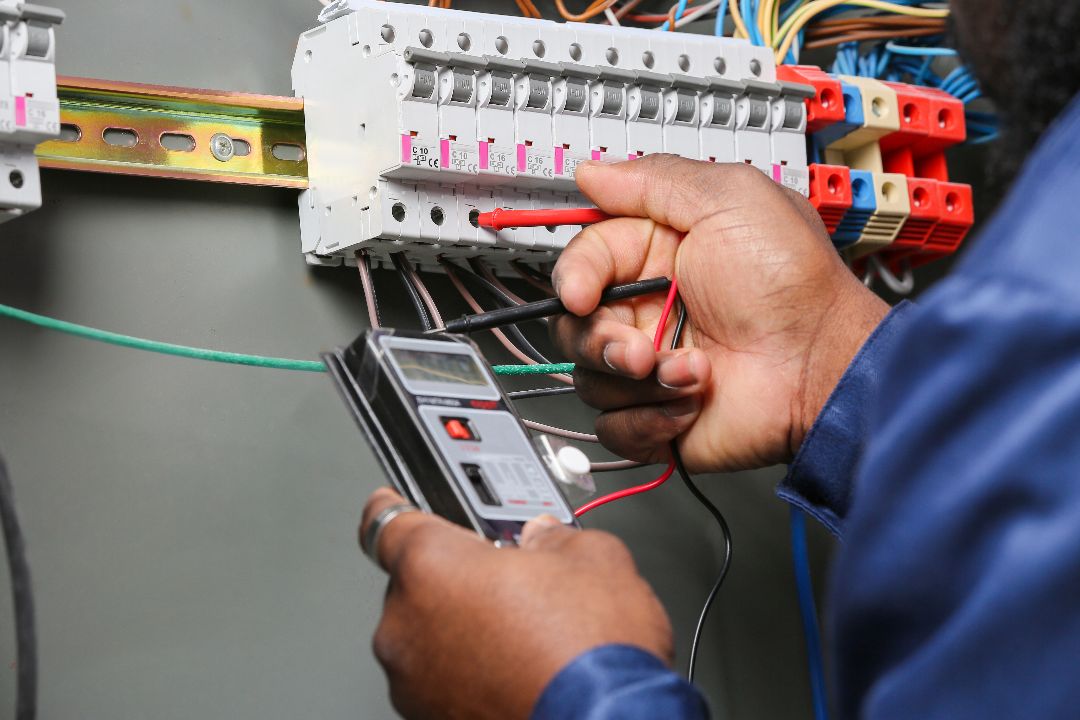
Diagnosis is methodical. The technician confirms the affected circuit at the panel, verifies which devices and outlets are downstream, and de-energizes the circuit before opening any device. Resistance and continuity readings are taken from the panel side and from the device side to narrow the fault location to a section of the circuit rather than guessing. If the short is in a fixture, appliance, or cord, that component is isolated, removed, and tested independently. If the short is in the cable run itself, the affected section is opened, inspected, and either repaired with proper splicing in an accessible junction box or replaced.
Once the failed component is identified, the repair uses code-compliant materials and torque values: correct wire gauge, correct breaker rating, correctly sized devices, and proper conductor terminations. After reassembly, the technician energizes the circuit, measures voltage at the panel and at each downstream device, and confirms that the breaker holds under load. The visit closes with a written summary of what failed, what was replaced, and what the homeowner should watch for if the symptom returns.
Common Sources of Short Circuits in Homes
Why MK Electric Man Handles Short Circuit Repairs Carefully
Short circuit repair Metairie residents call about often arrives with a story attached: the breaker tripped, someone reset it, it tripped again, and the third reset attempt left a faint burning smell. That sequence is exactly why MK Electric Man treats every short as a diagnostic job rather than a reset job. Licensed technicians arrive with insulation testers, multimeters, clamp meters, and the consumables needed to replace failed devices on the spot, so most residential shorts are isolated and corrected in a single visit rather than across multiple appointments.
Just as importantly, the work is documented. The homeowner sees the failed component, the readings before and after the repair, and a clear explanation of the fault path. Pricing is confirmed in writing before any cover plate comes off, and the repair carries a workmanship warranty backed by the same crew that performed it. To start a short circuit repair call, describe the symptoms to MK Electric Man at 504-883-5483 and the dispatcher will schedule a technician with the right tools for the fault.
Safety Before the Technician Arrives
A short circuit is a clear signal to stop using the affected circuit until it is repaired. If a breaker has tripped and will not hold a reset, leave it off. If it holds for a few seconds and trips again, stop resetting it; each cycle stresses the breaker and any compromised section of cable. If a specific outlet or fixture has visible damage, scorch marks, melted plastic, or a burning odor, unplug everything connected to it and treat the entire circuit as out of service.
Avoid plugging high-draw appliances into adjacent circuits as a workaround. A circuit that is already carrying its rated load will not handle the addition of a portable heater, a window unit, or a power tool, and overloading nearby circuits during a fault investigation is a common cause of secondary damage. Note exactly when the trip happens, which loads are running at the time, and whether the symptom is intermittent or constant. These details consistently shorten diagnosis and reduce the time the technician spends reproducing the fault.
Schedule the Repair
A tripped breaker is information, not a verdict. Behind the trip is a real fault that needs to be located, corrected, and verified before the circuit is returned to service. MK Electric Man performs short circuit diagnosis and repair as a single, measured workflow with licensed technicians, stocked trucks, and written documentation of every step. To book a visit, describe the trip pattern, or confirm that the situation needs immediate attention, call 504-883-5483 and the desk will get a technician scheduled with the tools the job requires.