What That Burning Smell Usually Means
A burning odor at an outlet almost always traces back to heat, and heat at a low-voltage residential receptacle traces back to a failing connection. The most common cause is a loose termination, where the conductor is not seated tightly under the screw or in the back-stab of the device. Resistance at that loose joint converts current into heat, the heat softens or scorches the plastic body of the device, and the smell follows. Other common sources include a failed receptacle that has lost its internal grip, an over-loaded circuit running near continuous draw, or a damaged cord cap melting against the face of the outlet.
Less common but more serious causes include arcing inside the wall box, conductor insulation breakdown, an overheated device on the same circuit upstream, or a compromised splice in a junction box. None of these are visible without opening the device, and none of them stop progressing just because the odor fades. Once a connection has scorched, the materials are no longer the same materials they were before the heat event, and the failure point will return.
How a Burning-Smell Outlet Call Is Handled
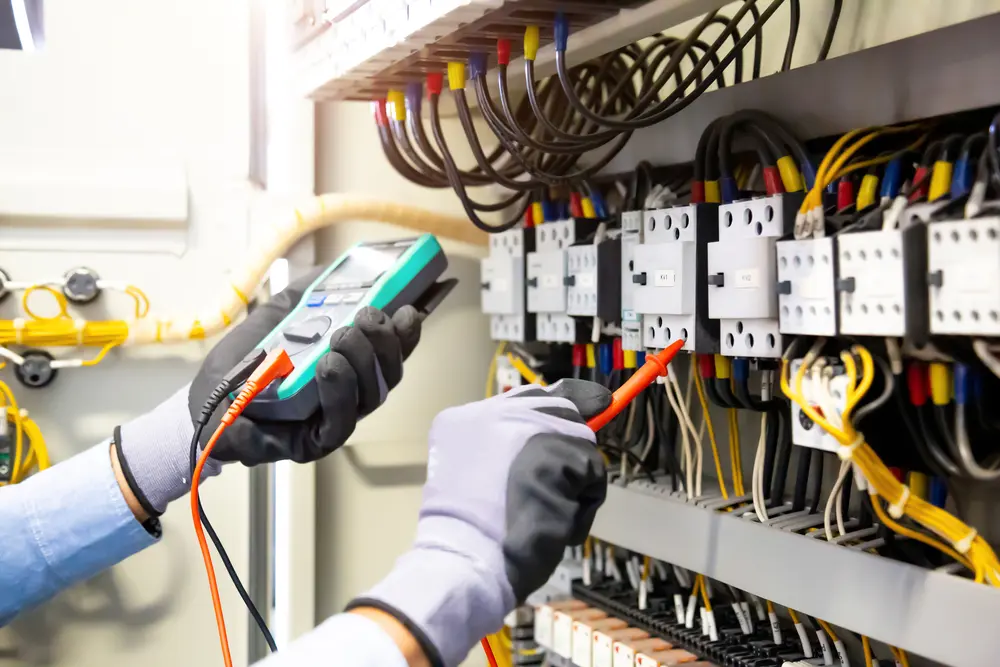
The visit begins with a careful walk-through. The technician asks where the odor is strongest, when it appeared, what was plugged in at the time, and whether the breaker has tripped. The affected circuit is identified at the panel and de-energized before any cover plate is removed. The receptacle is then pulled forward and inspected for scorching on the back of the device, on the conductor insulation, on the screw terminals, and inside the box. A meter confirms the circuit is dead before any contact, and a temperature reading documents how warm the surrounding materials still are.
If the device itself is the source, it is replaced with a properly rated receptacle, terminations are made with screw connections at correct torque, and any damaged sections of conductor insulation are addressed by replacing the affected length rather than wrapping over the damage. If the heat originated upstream, the technician traces the circuit back to the source of the failure and corrects it there. Once the repair is complete, the circuit is energized, voltage and load readings are taken at the device, and the homeowner sees a written summary of what failed, what was replaced, and what to monitor.

Warning Signs That Belong in the Call
Why MK Electric Man Is the Right Call for This Symptom
Burning-odor calls reward experience and stocked inventory. MK Electric Man dispatches licensed technicians with the meters, infrared thermometers, replacement receptacles, devices, and conductor materials needed to close most residential burning-odor calls in a single visit. The diagnostic workflow is consistent: confirm the symptom, isolate the circuit, inspect the device and the surrounding box, identify whether the failure is at the receptacle or upstream, and correct it with code-compliant materials. Nothing about the speed of the response changes the standard of the work.
Pricing is confirmed in writing before the cover plate comes off, and the repair carries a workmanship warranty. The homeowner is shown the failed component, the new component, and the readings that confirm the circuit is healthy before the technician closes the visit. To report a burning odor at an outlet, describe the symptoms and request priority scheduling, call MK Electric Man at 504-883-5483 and the dispatcher will route the call to the next available licensed tech. For burning smell outlet electrician Metairie services backed by code-compliant work and clean documentation, MK Electric Man is the dependable choice.
What to Do Until the Technician Arrives
First, stop using the suspect outlet. Unplug anything connected to it, and do not reinsert plugs to test whether the smell returns. If the odor is strong or the receptacle is visibly damaged, turn off the breaker for that circuit at the panel rather than leaving it energized. If the panel directory is not labeled clearly, turning off a breaker that powers the affected room is a reasonable interim step. Do not cover the outlet with tape, plastic, or furniture; airflow around the device is helpful, not harmful, while it is awaiting service.
Avoid plugging the disconnected loads into adjacent outlets without thinking about the circuit map. Many homes share a single circuit across several rooms, so the receptacle in the next room may be on the same wiring and the same fault. If a circuit on a different breaker is clearly available and lightly loaded, that is a better temporary path. Photograph the outlet, note the time the odor appeared, list any loads that were running, and have that information ready when the technician arrives.
Get the Visit Scheduled
Burning odors at outlets are early warnings, and they should be treated as such. MK Electric Man prioritizes these calls, sends licensed technicians with stocked trucks, and documents every repair with measured readings and written notes so the homeowner has a clear record of what was wrong and how it was corrected. To request a priority dispatch, describe the symptom in detail, or confirm whether the situation needs immediate attention, call 504-883-5483 and the desk will handle scheduling and confirm the arrival window.