Serving Amity Harbor with care.
Long Island commercial property owners who have managed buildings for any length of time know that a re-roofing project is not simply a matter of scheduling a crew and writing a check. The process involves structural assessment, product specification, permit coordination with local municipalities, and post-installation verification — all of which must be executed correctly if the new roof system is to perform as warranted. Amity Harbor and the surrounding Suffolk County communities, from Lindenhurst to Bay Shore, sit in a climate zone where winter freeze-thaw cycles, summer humidity, and coastal wind exposure stress roofing membranes in ways that make proper re-roofing methodology non-negotiable. Understanding what the process actually involves helps property owners ask the right questions, evaluate proposals accurately, and hold their roofing contractor accountable at every stage.
The term "re-roofing" covers two distinct approaches: overlay, in which a new membrane is installed directly over an existing system, and tear-off, in which existing layers are completely removed before new materials are applied. The choice between these paths is not simply a cost calculation — it is a structural and regulatory one. New York State building codes limit the number of roof layers permitted on a given structure, and many Long Island municipalities enforce these limits actively at the permit stage. Furthermore, overlaying a wet or failing deck traps moisture and accelerates insulation degradation, creating far greater costs within five to seven years than a proper tear-off would have. A qualified roofing contractor serving the Babylon and Amity Harbor market will always conduct core sampling before recommending overlay.
The deck condition assessment is the foundation of any re-roofing scope. A core sample — a small plug cut through all existing roof layers — reveals the number of plies already present, the condition of the insulation boards, and whether moisture has penetrated the structural deck. For wood-decked structures common in older Amity Harbor commercial buildings, any moisture intrusion means deck replacement before new membrane work begins. Concrete decks common in industrial buildings may show surface spalling or deteriorated lightweight insulating concrete that must be addressed before any new system achieves the adhesion required for a valid warranty. No reputable roofing contractor should propose materials or pricing before completing this diagnostic step.
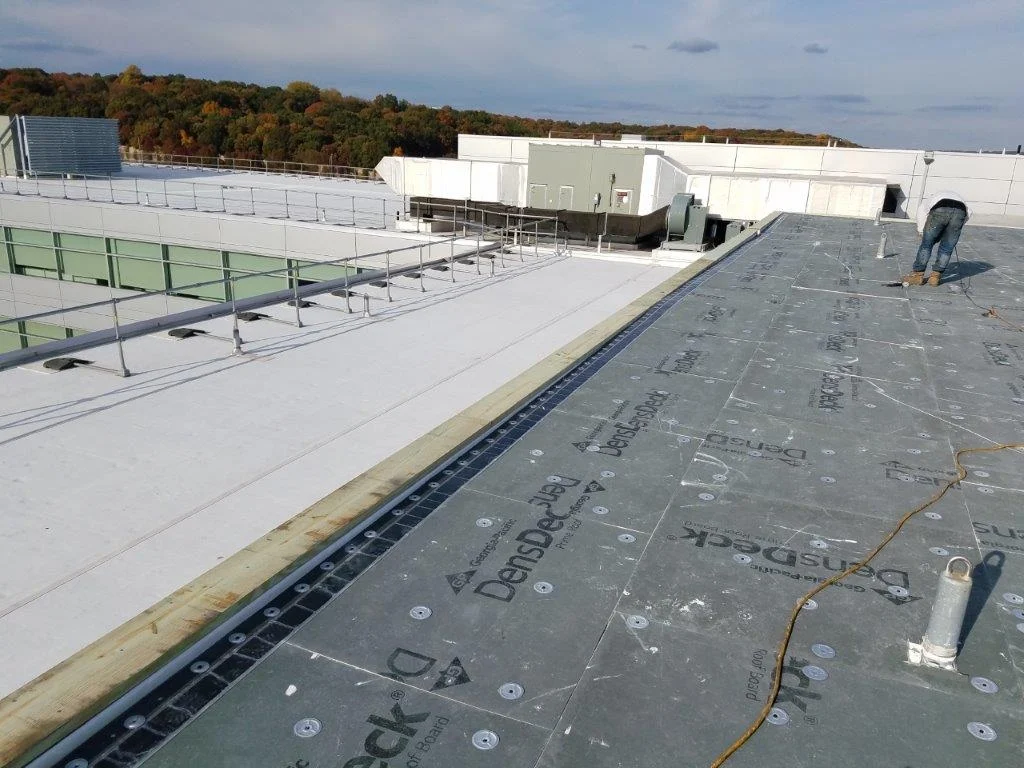
The full scope of re-roofing for a Long Island commercial building typically includes: removal of existing membrane and insulation (if tear-off), deck repair or replacement where required, installation of new polyisocyanurate (polyiso) insulation boards meeting current New York energy code requirements, installation of the selected membrane system (EPDM, TPO, or modified bitumen), flashing replacement at all penetrations, curbs, and parapet walls, and drain or scupper reconditioning. Each of these line items carries its own labor and materials cost and its own quality standard. Property owners who receive proposals that aggregate these items into a single line are not receiving the transparency needed to make an informed decision or to verify that each phase was executed correctly.
All-Star Roofing Inc. has been guiding Long Island property owners through every phase of commercial re-roofing since 1985. Founded by Ron Taylor, the company brings over 40 years of flat roof experience across Suffolk and Nassau Counties, with manufacturer certifications from Carlisle, Elevate, and Duro-Last that allow the issuance of NDL transferable warranties. With 16 reviews averaging 4.6 stars, All-Star Roofing Inc. has built a record of transparent, well-documented project execution that property owners and facility managers throughout Amity Harbor, Babylon, and the South Shore trust with their most valuable assets.
Visit All-Star Roofing Inc. at 86 Montauk Hwy, Amity Harbor, NY 11701, or call (631) 842-4837 today
Tear-off is the most labor-intensive phase of re-roofing and the one that reveals the true condition of the building envelope. The crew removes all existing membrane layers, typically using roofing spades and pneumatic tools, taking care not to damage the structural deck beneath. Debris is loaded into dumpsters positioned at the building's edge, and a temporary moisture barrier is applied at day's end to protect open deck areas from overnight precipitation. For Amity Harbor properties near Great South Bay, weather windows must be managed carefully since coastal fog and afternoon storms can accelerate unexpectedly. All-Star Roofing Inc. plans each phase of re-roofing around NOAA forecast data for the 11701 area to minimize weather-related exposure periods.
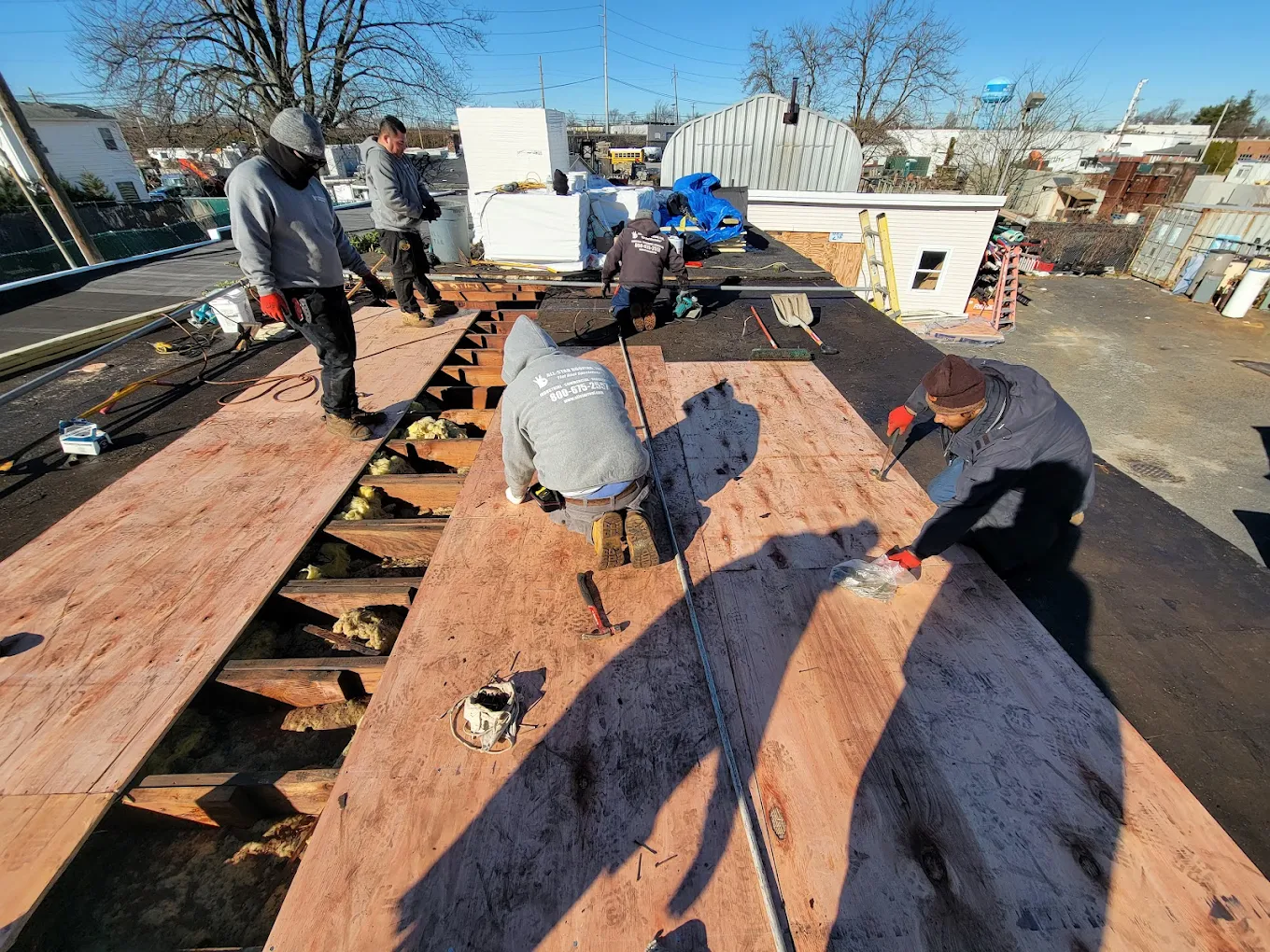
After deck inspection and any required repairs, insulation boards are mechanically fastened or adhered to meet the wind uplift ratings specified in ASCE 7 for coastal New York, which can require fastener densities significantly higher than inland requirements. EPDM membrane sheets are then rolled out, seamed with adhesive or tape depending on the system specification, and terminated at all edges with metal edging and through-wall flashing. TPO systems use hot-air welded seams that create bonds stronger than the membrane itself when performed at the correct temperature and speed. All penetrations — HVAC curbs, plumbing vents, skylights — receive prefabricated or field-formed flashing boots that are the single most critical quality item in any re-roofing project. EPDM roof installation Long Island specialists understand that seam integrity at penetrations determines warranty validity and long-term performance.
Re-roofing a commercial building in Suffolk County requires a building permit from the applicable town — Town of Babylon, Town of Islip, or the relevant incorporated village — prior to commencing work. The permit application requires contractor license information, a project description noting tear-off versus overlay, and in many cases a roof plan showing the proposed system and drainage configuration. Inspections are typically required at deck stage (before insulation is installed) and at final completion. All-Star Roofing Inc. handles permit procurement as part of the project scope for Long Island clients, coordinating directly with town building departments so property owners are not burdened with administrative back-and-forth. Projects completed without permits create title encumbrances that complicate property sales and refinancing.
A manufacturer's material warranty and a contractor's workmanship warranty are both essential components of a properly closed re-roofing project. Manufacturer warranties from brands like Carlisle, GAF, and Duro-Last range from 10 to 25 years and cover membrane defects — but only when installation was performed by a certified applicator following manufacturer specifications. The contractor's workmanship warranty covers installation errors and typically runs two to five years. All-Star Roofing Inc. provides both warranties in writing at project closeout, and because of the company's certified status with multiple manufacturers, NDL warranties — which cover both materials and labor for qualifying installations — are available to Long Island clients for appropriate project sizes.
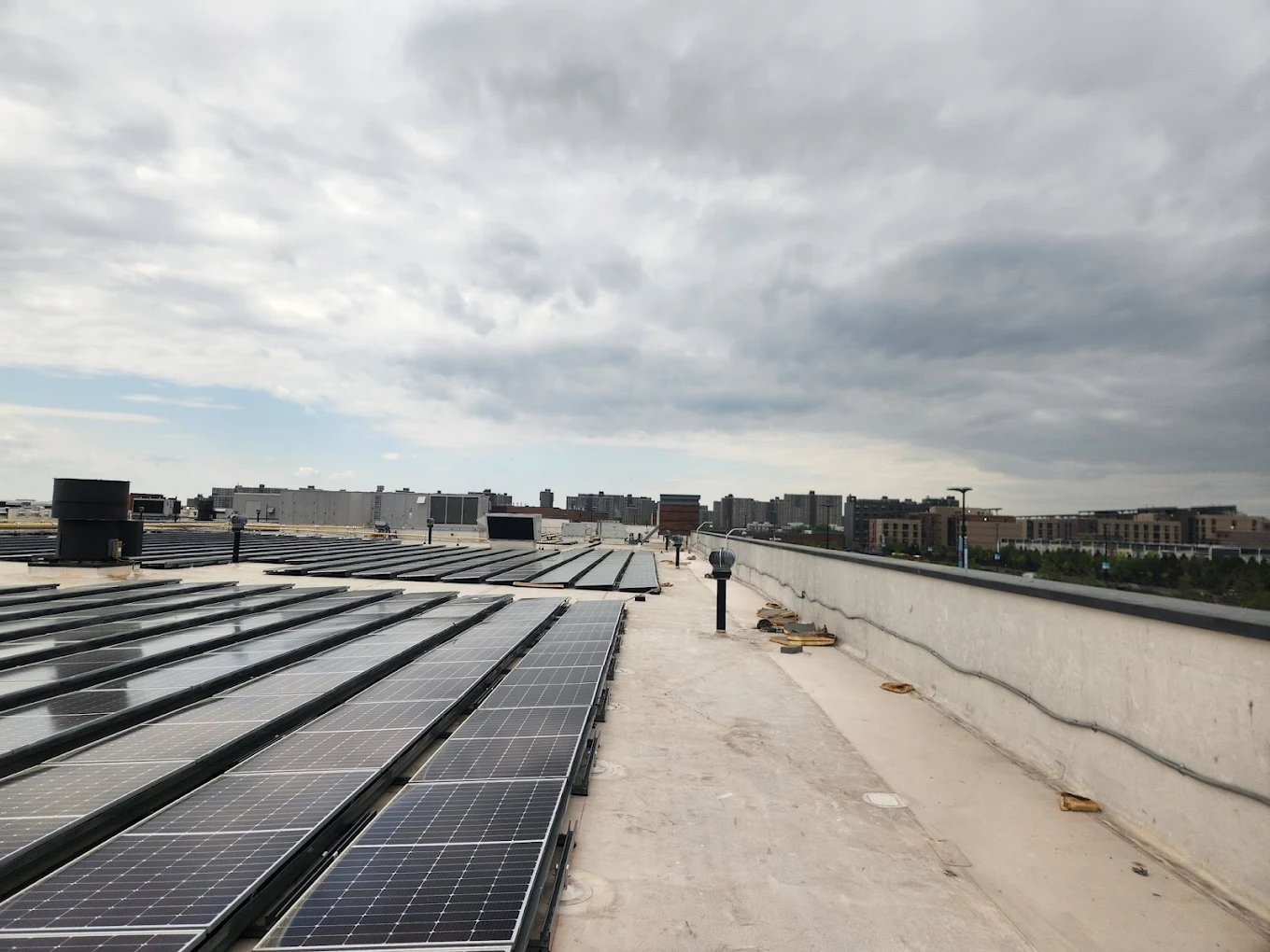
Re-roofing a commercial building in a dense South Shore neighborhood like Amityville or Lindenhurst requires thoughtful logistics planning. Dumpster placement must comply with village or town regulations regarding public right-of-way use. Material deliveries — pallets of insulation board and rolls of membrane — require forklift or conveyor staging areas that don't obstruct tenant access. For multi-tenant retail or office buildings, phased re-roofing allows the project to proceed in sections, keeping occupied spaces weathertight throughout. All-Star Roofing Inc. has managed re-roofing logistics in every type of Long Island commercial setting, from Montauk Highway strip malls to multi-story industrial facilities near the Southern State Parkway interchange. TPO roofing contractor Long Island professionals familiar with local logistics constraints deliver projects with fewer delays and community friction.
Once the new membrane is installed and inspected, the roofing contractor should provide a thorough walkthrough with the property owner or facilities manager, documenting all penetration locations, drain positions, and any areas requiring future monitoring. Warranty registration with the manufacturer should be completed within 30 days of project closeout — most manufacturers require this for the warranty to activate. A post-installation maintenance checklist, including recommended bi-annual inspection intervals, proper HVAC contractor protocols to avoid membrane puncture during equipment servicing, and drain clearing schedules, should be provided in writing. All-Star Roofing Inc. provides each Long Island client with a project closeout package that includes as-built drawings, permit sign-off, warranty certificates, and a maintenance guide tailored to the specific membrane system installed.
Ready to begin your Long Island re-roofing project? Contact All-Star Roofing Inc. at (631) 842-4837
All-Star Roofing Inc. serves commercial and industrial property owners throughout Amity Harbor and across Suffolk County, including West Babylon, North Babylon, Lindenhurst, Amityville, Copiague, Bay Shore, Islip, Brentwood, Central Islip, and Oakdale. Whether your building is in a waterfront village or an inland industrial zone, our experienced re-roofing specialists are equipped to handle projects of any scale and complexity across Long Island and the Greater New York Metropolitan Area.
Most commercial flat roof re-roofing projects in Suffolk County are completed within three to ten business days, depending on the roof size, system type, and whether tear-off or overlay is selected. For a 10,000 to 20,000 square foot building — common along the Amity Harbor and Babylon commercial corridors — a full tear-off and EPDM or TPO installation typically runs five to seven days under normal weather conditions. All-Star Roofing Inc. provides a project schedule in writing prior to mobilization so tenants and property managers can plan accordingly.
Overlay is sometimes permissible when the existing deck is structurally sound and dry, no more than one prior layer exists, and local Town of Babylon or Town of Islip permit requirements allow it. A core sample is essential before making this determination — wet insulation must never be overlaid regardless of cost considerations. All-Star Roofing Inc. performs core sampling on every project site in Amity Harbor and across Long Island before recommending a re-roofing approach, ensuring that your decision is based on actual building conditions rather than assumptions.
The most common causes of premature re-roofing failure on Long Island flat roofs are improper seam adhesion at penetrations and parapet terminations, insufficient wind uplift fastening for coastal exposure conditions, ponding water from inadequate drain placement or slope, and HVAC technicians puncturing membranes during equipment servicing after project completion. All-Star Roofing Inc. addresses each of these failure modes explicitly in the re-roofing scope, using manufacturer-specified fastener patterns, pre-formed flashing boots, and post-completion documentation that details how trades should safely access the roof during the warranty period.
Yes. All-Star Roofing Inc. manages the full permit process for commercial re-roofing projects in the Town of Babylon, Town of Islip, and incorporated villages throughout Long Island. This includes preparing the permit application, coordinating building department inspections at deck and final stages, and ensuring that all permit documentation is filed correctly before any work begins. Property owners in West Babylon, North Babylon, Amityville, and Lindenhurst can hand off the administrative burden entirely to the All-Star Roofing team.
EPDM (ethylene propylene diene monomer) is a vulcanized rubber membrane that has been used on commercial roofs across Long Island for over 40 years. It is flexible in cold weather, resistant to UV degradation, and bonded with adhesive or taped seams. TPO (thermoplastic polyolefin) is a more recent single-ply membrane that is heat-welded, offering high reflectivity that meets New York cool roof requirements and excellent resistance to puncture. For Amity Harbor and coastal Suffolk County buildings, both systems perform well when properly installed — the choice depends on building use, energy goals, and specific warranty objectives.